
Carp Fishing Rod vs Reel: Which Upgrade Matters Most?
Torn between upgrading your rod or reel? Here's exactly what to prioritise.
Key Facts
The rod governs casting distance, bite detection, and fish control. The reel handles drag reliability and baitrunner performance. Both matter, but for different reasons.What You Gain
Upgrade the right piece of kit and you'll lose fewer fish, cast further, and fish overnights with confidence. A balanced setup always outperforms mismatched expensive gear.Watch Out
A premium reel on a budget rod, or vice versa, still leaves performance on the table. Never upgrade one without considering whether the other can keep up.
Most anglers get this wrong by defaulting to the most expensive option rather than the right one for their setup. I'll cut through the noise: your reel delivers immediate reliability, but a mismatched rod caps everything. This breakdown tells you precisely where your money works hardest.
Rod or Reel: Which Upgrade Has the Bigger Impact on Carp Fishing?
If you’re weighing up whether to upgrade your carp fishing rod or reel first, here’s the short answer: your reel tends to have a more immediate and consistent impact on your fishing, but a poor rod will cap your performance in ways a reel simply can’t fix. The real answer depends on what’s actually holding you back right now.
Let’s break it down properly so you can make the right call for your setup and your budget.
According to the Environment Agency’s Fisheries Annual Report 2024 to 2025, 934,000 fishing licences were sold in England in 2024 to 25, the second consecutive year of growth, and the first year-on-year increase since 2010. Carp fishing is a significant driver of that participation. Getting your rod and reel combination right is one of the most impactful decisions you’ll make as an angler.
Understanding What Each Piece of Kit Actually Does
Before you spend a penny, it’s worth being clear on what a rod and reel each contribute to your carp fishing.
The Rod’s Role in Carp Fishing
A carp rod is your casting tool, your bite indicator mount, and your fish-fighting lever all in one. It determines:
- Casting distance & accuracy
- Bite detection sensitivity
- Fish-fighting leverage
- Rig presentation at range
- Drag system reliability
- Baitrunner performance
- Line lay consistency
- Retrieve speed control
- Casting distance and accuracythe action and test curve dictate how far and how precisely you can deliver a rig
- Bite detectiona sensitive tip transmits knocks and runs more clearly
- Fish controlthe blank’s power and bend profile dictate how you can apply pressure during a fight
- Rig presentationa stiffer rod can affect how a rig lands, especially at range
A carp rod also has a fixed test curve (TC). As Korda Tackle explains, the test curve is “the amount of weight that it takes to bend the tip so that it is at a 90 degree angle to the butt, and this is measured in pounds.” According to CarpRods.co.uk, most carp rods range from 2lb to 3.5lb TC, with the greater the test curve, the stiffer the rod becomes.
For most UK carp fishing on day-ticket waters and club lakes, The River Bend notes that “a 3 to 3.25lb TC rod in a 12ft length is the standard starting point.” That rating shapes every aspect of how the rod performs.
The Reel’s Role in Carp Fishing
A carp reel handles line management, drag performance, and retrieval. It affects:
- Line laypoor line lay causes tangles and inconsistent casting
- Drag systemthis is critical when a big carp makes a run; a smooth, reliable drag prevents hook pulls and line breaks
- Retrieve speedimportant when you need to pick up slack quickly after a take
- Baitrunner/freespool functiona core feature for carp fishing that allows a fish to take line freely before you engage the main drag
A reel with a poor drag or unreliable baitrunner is a liability on a big fish. No rod upgrade fixes that.
Where a Rod Upgrade Makes the Most Difference
Casting Distance and Accuracy
If you’re consistently falling short of the spots you want to reach, or struggling to hit tight margins accurately, your rod is almost certainly the limiting factor.
A 3lb TC rod with a through action will behave very differently from a 2.75lb TC fast-taper blank when punching a lead into a headwind at 90 yards. The right rod for the right job makes a measurable difference here.
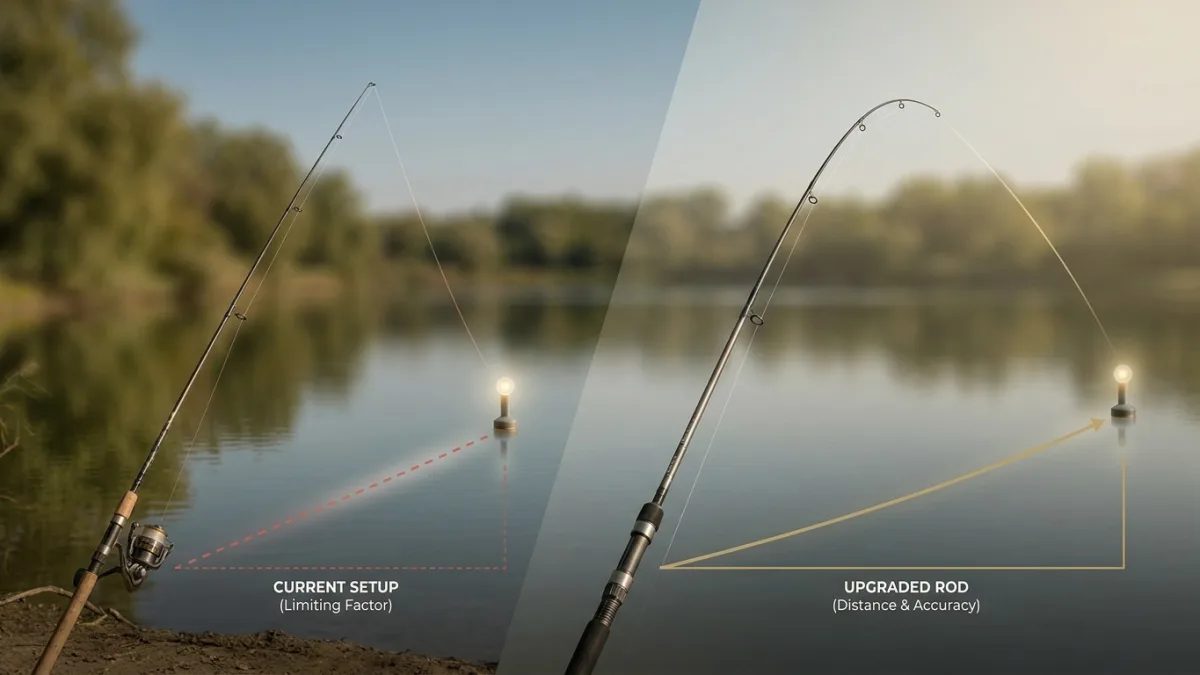
As Angling Direct explains: fast-action (tip action) rods are made for long-range fishing as they’re much stiffer, so they recover quickly from casting, while through-action rods are ideal for playing carp and close-range control.
Upgrading from a budget entry-level rod to a mid-range blank (typically in the £80-£200 range) often brings:
- Better carbon quality, reducing weight and improving feel
- More consistent casting action across the full blank length
- Tighter tolerances on the rings and fittings
Bite Detection and Sensitivity
On venues where fish are cautious, pressured day-ticket lakes, for instance, a more sensitive tip can help you spot line bites and tentative takes that a stiffer, cheaper rod might mask.
This matters most when you’re fishing slack lines or chod rigs where movement is subtle.
Fish-Fighting Capability
A rod with a good progressive action cushions lunges from big fish better than a stiff blank that transmits every knock directly to the hook hold. If you’re losing fish at the net, your rod’s action is worth examining.
As Korda note, a fast-taper rod’s tip “is very good at absorbing the lunges and head shakes of a carp when you have it under the rod tip, and reduces the risk of a hook pull.”
Where a Reel Upgrade Makes the Most Difference
Drag System Reliability
This is where a reel upgrade pays off most dramatically. A cheap reel with a sticky or inconsistent drag will lose you fish. Full stop.
When a 30lb common makes a run at close range, you need a drag that releases line smoothly under pressure. Budget reels often have:
- Uneven drag washers that judder rather than slip
- Insufficient maximum drag pressure for heavier lines
- Drag settings that creep under sustained load
A mid-range reel from a reputable brand, think Shimano, Daiwa, or Fox, will have a front drag or rear drag system with multiple washers that perform consistently cast after cast, session after session.
Baitrunner Performance
The baitrunner (or freespool) mechanism is arguably the most carp-specific feature of a carp reel. A poor baitrunner can:
- Engage too stiffly, causing a fish to feel resistance and drop the bait
- Slip under load, meaning it doesn’t hold correctly when you need it to
- Fail to disengage cleanly when you strike
Upgrading to a reel with a quality baitrunner is a genuine game-changer on overnight sessions. According to Angling Times, the Shimano Baitrunner system means “you only have to flick the lever and your preferred fishing drag is set and remembered until you need to change it”, a significant advantage when a run comes in the dark.
Line Lay and Casting Consistency
Even if your rod is capable of 100 yards, a reel with poor line lay will rob you of distance and cause frustrating tangles. A quality reel lays line evenly across the spool, which translates directly into smoother, longer casts.
Consistent line lay is one of those things you don’t appreciate until you’ve fished with a reel that does it properly.
Head-to-Head: Rod vs Reel Upgrade Comparison
Here’s a practical breakdown to help you decide based on your current situation:
| Scenario | Upgrade Priority | Why |
|---|---|---|
| Struggling to reach distant spots | Rod | Test curve and action drive casting distance |
| Losing fish on the run | Reel | Drag system is the critical factor |
| Baitrunner engaging poorly | Reel | Directly affects bite indication and hook-ups |
| Tip too stiff for bite detection | Rod | Sensitivity is a rod characteristic |
| Line tangling or poor casting | Reel | Line lay and spool quality are the cause |
| Fish throwing the hook mid-fight | Rod | Progressive action cushions lunges |
| Fishing overnights on alarms | Reel | Baitrunner reliability is non-negotiable |
| Casting accuracy into tight spots | Rod | Action and taper determine precision |
Budget Allocation: Should the Rod or Reel Cost More?
This is one of the most common questions at the tackle shop counter, and the honest answer is: it depends on your fishing style, but there are some useful rules of thumb.
The Traditional 50/50 Split
Many experienced carp anglers suggest splitting your rod and reel budget roughly equally. If you’re spending £150 on rods, aim for reels in the same ballpark. This keeps your setup balanced.
Budget Balance Rule
Drop below that ratio and the reel becomes the weak link in your setup.
When to Spend More on the Reel
Spend proportionally more on your reel if:
- You fish pressured, busy venues where big fish are common
- You do a lot of overnight or 24-hour sessions (baitrunner reliability matters more)
- You’re fishing snaggy swims where drag performance is critical
- You’re using heavier lines (15lb+) that demand a robust drag system
When to Spend More on the Rod
Spend proportionally more on your rod if:
- Distance casting is a regular requirement on your target venues
- You’re fishing rivers or exposed reservoirs where casting accuracy is key
- You want a lighter, more comfortable rod for long sessions
- You’re targeting very large fish where blank power matters
A rough guide used by many UK carp anglers: buy the best rod you can afford, then match it with a reel that costs at least 60 to 70% of the rod’s price. Drop below that ratio and the reel becomes the weak link.
💡 Expert tip: As TackleMart notes, it’s essential to “balance [the rod] right with a suitable carp fishing reel that is loaded with a suitable carp fishing line for the situations you are faced with in your chosen swim.” A mismatched setup, however expensive the individual components, will always underperform a balanced one.
What a Carp Rod Has That a Normal Rod Doesn’t
It’s worth briefly covering this because it affects the upgrade decision, especially if you’re coming from coarse or match fishing.
A dedicated carp rod differs from a standard fishing rod in several key ways:
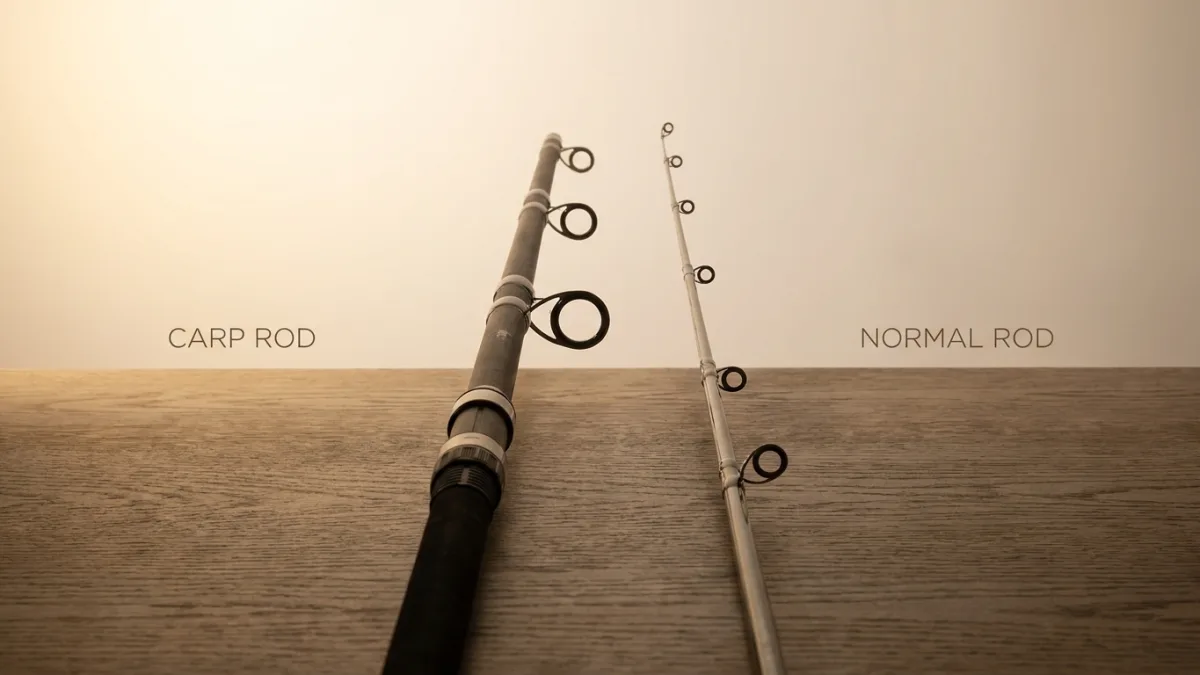
- Test curve ratingcarp rods are rated in pounds (2lb TC, 2.75lb TC, 3lb TC etc.) to match lead weights and line class. As The River Bend explains, this system “is primarily used in UK coarse and carp fishing”
- Longer lengthtypically 12ft, sometimes 13ft, for elevated casting leverage
- Larger, stronger ringsto handle braided or heavy mono lines without wear. A 50mm butt ring is now fairly standard on modern carp rods, working well with big-pit style reels
- Reinforced butt sectionfor the sustained pressure of playing large fish
- Screw-locking reel seatprevents the reel from shifting during a fight
Using a standard coarse rod for carp fishing isn’t just inefficient, it’s risky. The blank won’t handle the sustained pressure of a large carp, and the rings will wear rapidly with heavier lines.
If you’re currently using a non-carp-specific rod, that upgrade takes priority over any reel improvement.
Practical Advice: Making the Right Call for Your Setup
The consistent message from real sessions on UK waters is this: audit what’s actually failing before you spend.
Ask yourself these questions:
Fix Failures First
Repair broken baitrunner, cracked blank or damaged rings
Upgrade the Weak Link
Replace whichever item is costing you fish or distance
Balance Your Setup
Match rod and reel quality to avoid wasted performance
- Am I losing fish?If yes, is it during the run (reel/drag) or the fight (rod action)?
- Am I missing spots?Casting issues usually point to the rod, though line lay on the reel plays a part too
- Is my baitrunner reliable?If not, reel upgrade first, no debate
- Is my rod appropriate for the venue?A 2.25lb TC rod on a big pit at range is the wrong tool regardless of reel quality
The Minimum Viable Upgrade Path
If budget is tight and you can only upgrade one at a time:
- First: Fix any obvious mechanical failures (broken baitrunner, cracked blank, damaged rings)
- Second: Upgrade whichever piece of kit is causing you to lose fish or miss opportunities
- Third: Once both are solid, balance the setup, a great reel on a poor rod, or vice versa, still leaves performance on the table
The best carp setup is a balanced one. A £300 reel on a £40 rod is a waste of money. A £300 rod with a £30 reel will let you down on a big fish.
Frequently Asked Questions
No, the rod generally matters more than the reel. The rod is responsible for casting distance, bite detection, and fish control during the fight. As Korda Tackle note, the three most important factors when choosing a carp rod are your target casting distance, the size of the fish you’re after, and your personal fishing style, none of which a reel can compensate for. A reliable reel with a smooth drag is still essential, but it’s the rod blank that does most of the heavy lifting on the bank.
It depends on the reel size and line type, and it’s not always a good idea. Reel capacity is determined by line diameter, not breaking strain. Heavier mono on a small spool can cause coiling and poor casting. However, braid is significantly thinner for its breaking strain, so 10lb braid may physically fit where 10lb mono won’t. Always check your reel’s spool capacity in millimetres rather than relying on the lb rating alone to avoid an unbalanced, poorly performing setup.
Spend more on the rod, it’s the most impactful upgrade for your money. The quality difference between entry-level and mid-range rods is far greater than the equivalent jump in reels. A solid mid-range reel handles line, drag, and retrieval reliably without needing to be top-of-the-range. According to TackleMart, the most common test curves for carp rods tend to be between 2.5lb and 3lband a well-chosen rod in that range, matched with a reliable baitrunner reel, will outperform a mismatched expensive setup every time. Prioritise the blank first, then the reel.
Carp rods are purpose-built for power, distance, and fish control, standard rods simply aren’t. Key differences include:
- Test curve: Carp rods are rated in lbs (typically 2.5lb-3.5lb), measuring the stiffness and casting power of the blank, a system not used on general rods
- Length: Most carp rods are 12 à 13ft, designed to maximise casting distance on open waters, with 12ft being the most common and versatile length for UK fishing
- Action: Built with either through-action (for fish control and close-range work) or fast-taper action (for long-range casting), whereas general rods are far less specialised
- Construction: Heavier-duty guides, reinforced blanks, and larger reel seats to handle the stress of powerful carp runs